
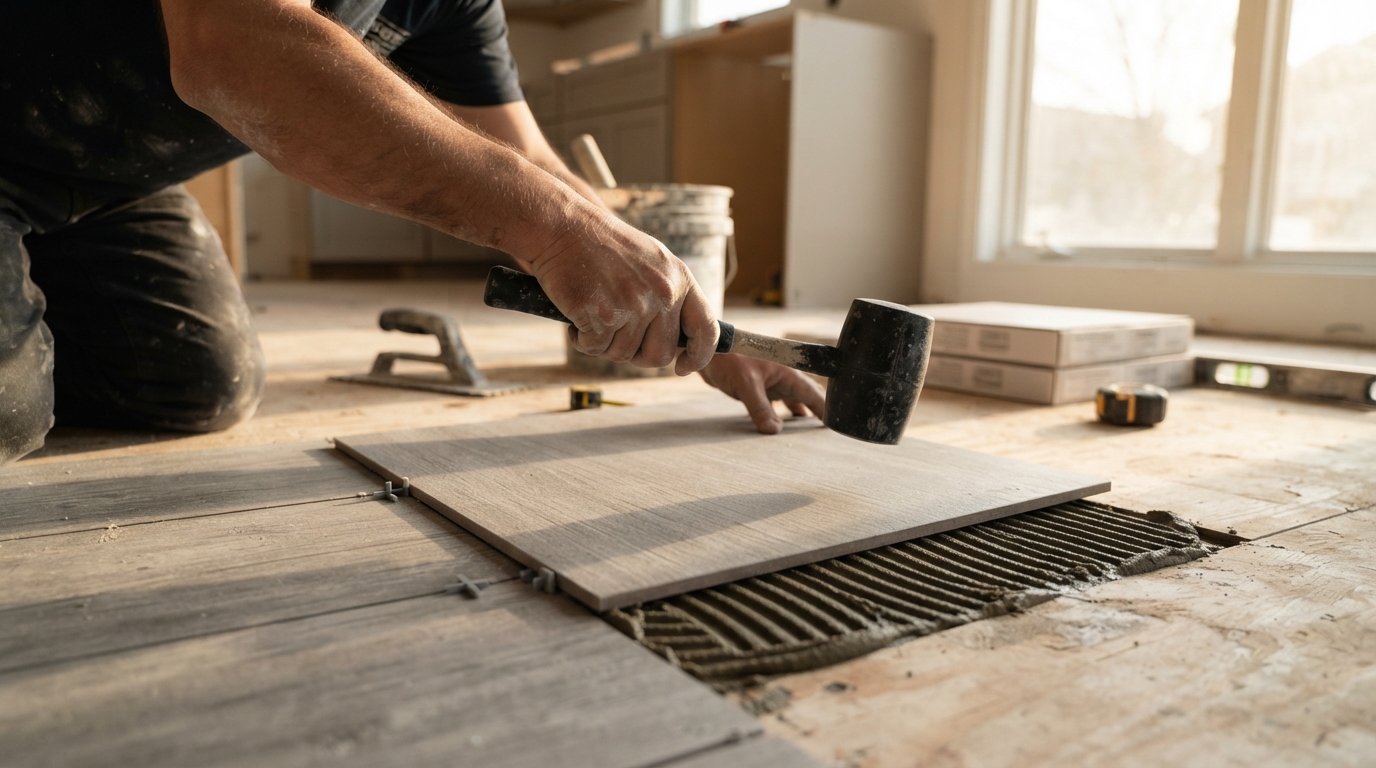
• Successful tile flooring installation depends on subfloor condition, moisture control, and tile selection suited to the room’s traffic and moisture exposure.
• Homeowners in Independence, MO should plan for site measurement, substrate prep, and material selection before installation day to avoid costly rework.
• A short planning checklist and comparison of common tile types can help homeowners set realistic expectations for budget and timeline.
Homeowners searching for guidance on tile flooring installation in Independence MO are usually trying to understand what happens before the crew arrives and how to avoid problems after the project is finished. The short answer: lasting results come from proper subfloor preparation, moisture assessment, and selecting a tile type matched to the room’s function, not just the look of the sample board.
Tile Flooring Installation In Independence MO starts with an honest look at the existing floor. A showroom near the project site, such as Big Bobs Flooring Outlet, can walk homeowners through in-stock tile options and connect them with installation services, but the planning steps below apply no matter who performs the work.
Why Subfloor Condition Determines Tile Longevity
Tile is rigid. Unlike carpet or vinyl, it cannot flex with a subfloor that moves, sags, or holds moisture, which is why preparation matters more for tile than for almost any other flooring type.
• Structural deflection limits exist for a reason: excessive flex under foot traffic is a leading cause of cracked grout lines and loose tiles over time.
• Flatness tolerances are typically measured within fractions of an inch over a 10-foot span, and gaps beyond that threshold usually require a leveling compound before tile can go down.
• Moisture trapped beneath concrete or wood subfloors can undermine adhesive bond long after installation looks complete.
Indoor moisture control is not just a flooring concern. The EPA’s guidance on moisture and mold prevention notes that keeping relative humidity below 60 percent, and ideally between 30 and 50 percent, helps prevent conditions that damage building materials and promote mold growth. Applying that same humidity discipline during and after a tile project protects both the installation and the home’s air quality.
Planning Checklist Before Installation Day
A short pre-installation checklist helps homeowners avoid delays once the crew arrives:
1. Confirm subfloor type. Concrete, plywood, and existing tile each require different prep steps and underlayment choices.
2. Schedule a moisture check. Ask whether the installer will test for moisture before committing to final material choices, particularly in kitchens, bathrooms, and basements.
3. Measure accurately. Room dimensions, transitions, and doorway clearances affect both material quantity and final cost.
4. Select tile for the room’s use. Porcelain handles moisture and traffic differently than natural stone or glass tile.
5. Set a realistic timeline. Demolition, drying time for leveling compounds, and grout curing all add days that are easy to underestimate.
Comparing Common Tile Types for Residential Use
Choosing a tile type is often where homeowners get stuck. The table below outlines general characteristics of options commonly installed in residential settings.
|
Tile Type |
Best Suited For |
Maintenance Level |
Moisture Resistance |
|
Porcelain |
Kitchens, bathrooms, entryways |
Low |
High |
|
Ceramic |
Living areas, low-traffic rooms |
Low to moderate |
Moderate |
|
Natural stone |
Accent areas, feature walls |
Higher (sealing required) |
Varies by stone type |
|
Glass tile |
Backsplashes, accent walls |
Moderate |
High (surface), not for structural floors |
Porcelain and ceramic remain the most common choices for full-room flooring because they balance durability with manageable upkeep. Natural stone and glass tile are frequently reserved for accent applications such as backsplashes or shower surrounds, where visual impact matters more than large-scale foot traffic resistance.
Setting Expectations for Installation Day
Even with careful planning, a few realities shape every tile project. Grout needs adequate curing time before the floor is walked on regularly, and any leveling compound used during prep must dry fully before tile setting begins.
• Expect noise and some dust during demolition and substrate prep, even with containment measures in place.
• Confirm in advance which rooms will be inaccessible and for how long.
• Ask about transition strips or thresholds where tile meets another flooring type, since uneven heights are a common after-the-fact complaint.
Clear communication about these steps before work begins reduces surprises and helps the finished floor perform the way it was designed to.
Frequently Asked Questions
How long does tile flooring installation typically take? Timelines vary based on room size, subfloor condition, and whether old flooring must be removed first. Homeowners should ask for a project-specific estimate rather than relying on general online timeframes.
Can tile be installed over existing flooring? Sometimes, depending on the condition and type of the existing surface, but an inspection is needed to confirm the substrate meets flatness and stability requirements.
What rooms are best suited for tile? Kitchens, bathrooms, entryways, and mudrooms are common choices because of tile’s moisture resistance and durability under repeated foot traffic.
Does grout color affect maintenance? Lighter grout tends to show staining sooner than darker grout, which is a practical consideration for high-traffic or moisture-prone rooms.
Planning a tile project around subfloor condition, moisture control, and tile selection gives Independence homeowners a clearer path to a floor that holds up over time. Reviewing in-stock options and installation services with a local showroom such as Big Bobs Flooring Outlet can help translate this planning checklist into a project timeline suited to a specific home.