
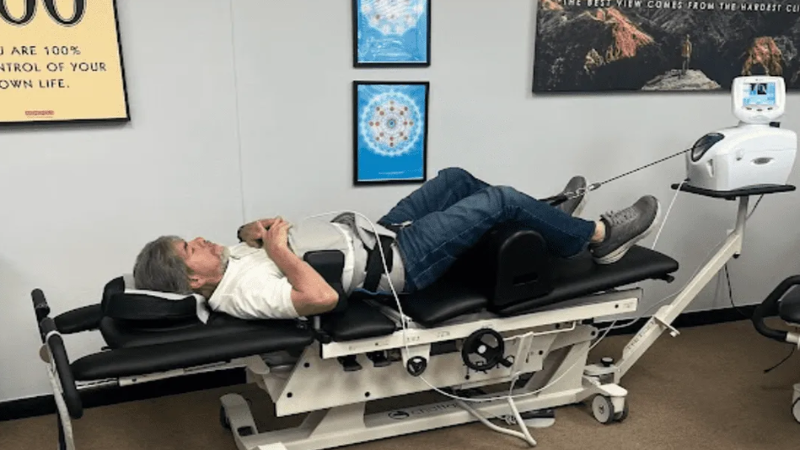
Most people need a series of spinal decompression sessions rather than a single visit, and the exact number depends on the condition, how long it has been present, and how the spine responds over time. A realistic plan starts with a thorough exam and changes based on regular progress checks, not a number picked in advance.
That answer can feel frustrating when you’re hurting and want a clear timeline. But once you understand what drives the number, it becomes much easier to judge whether a plan makes sense for you.
Why One Session Is Rarely Enough
Spinal decompression gently stretches the spine on a motorized traction table, easing pressure on the discs and the nerves around them. Each session unloads the spine for a short time. Then you get up, sit, stand, drive, and carry on with your day, and gravity loads it again.
That’s why the benefits tend to build with repetition. Discs, joints, and the surrounding muscles respond gradually, the same way strength or flexibility builds over weeks of training rather than one workout.
Early relief is common, and it’s encouraging. It just isn’t the same as the underlying problem being resolved. Stopping as soon as pain dips is one of the most common reasons symptoms come back.
What Does a Typical Decompression Plan Look Like?
Most plans are organized as a series of visits spread over several weeks. Clinics set their own guidelines, but the structure usually follows a similar arc.
The Disc Chiropractic in Wheat Ridge, for example, describes typical plans for spinal decompression therapy at their clinic as ranging from 12 to 24 sessions, with some patients noticing changes within the first few visits. Your own number may land inside or outside a range like that, depending on what your exam shows.
Within a plan, care often moves through three general phases:
-
Relief phase. Visits are more frequent at the start, while symptoms are most active and the goal is calming irritated tissue.
-
Corrective phase. As pain settles, the focus shifts to restoring better motion and building support around the spine.
-
Stabilization phase. Visits space out, and home exercise and daily habits carry more of the load.
Not every plan follows this exactly. But if a provider can’t explain what each stage is for, ask.
What Factors Change How Many Sessions You Need?
No two spines respond the same way. These are the factors that most often shift the number up or down.
The Condition Being Treated
Decompression is commonly used for bulging and herniated discs, degenerative disc disease, sciatica, and spinal stenosis. Each behaves differently. A recent disc irritation and a long-standing degenerative change aren’t the same problem, so they rarely follow the same timeline.
How Long the Problem Has Been There
Pain that started a few weeks ago often responds sooner than pain that has built up over years. Long-standing problems usually come with compensations, such as stiff neighboring joints, weak supporting muscles, and protective movement habits, and those take time to unwind.
Nerve Involvement
Back or neck pain that stays local is one thing. Pain, numbness, or tingling that travels into an arm or leg suggests a nerve is involved, and nerves tend to settle more slowly than muscles. Weakness is a more serious sign and needs prompt evaluation.
Lumbar vs. Cervical Decompression
Lumbar decompression targets the lower back, while cervical decompression targets the neck. The setup and positioning differ, but neither region automatically needs more or fewer sessions. The number depends on the findings at that level, not the region itself.
Age and Overall Disc Health
Discs naturally change with age. An older adult with widespread degeneration may need a longer plan, or a plan with different goals, than a younger person with a single irritated disc. That isn’t a reason to rule decompression out. It’s a reason to set realistic expectations.
Daily Demands
Long hours of sitting at a desk, a job that involves heavy lifting, long commutes, or high-impact sports all load the spine between sessions. The more stress your spine absorbs day to day, the more those habits shape how quickly you progress.
Consistency
Skipped or delayed sessions can stall progress, especially early on. A plan works best when it’s followed as designed, so it’s worth choosing a schedule you can realistically keep.
How Can You Tell If Decompression Is Working?
Progress isn’t only about the pain number on a given day. Look for patterns over a couple of weeks:
-
Pain shows up less often, or eases faster when it does.
-
Symptoms that traveled into a leg or arm retreat closer to the spine.
-
Sitting, standing, walking, or sleeping becomes easier.
-
You can return to activities you’d been avoiding.
Good providers recheck your progress at planned intervals and adjust the plan based on what they find. If there’s little or no change after a reasonable trial, that’s useful information too. It may mean the plan needs to change, or that another type of care or a referral makes more sense.
What Else Affects Results Besides the Table?
Decompression is usually one part of a broader chiropractic treatment plan rather than a standalone fix. Depending on your situation, that plan may include chiropractic adjustments to restore joint motion, core stabilization exercises, and posture or ergonomic changes for work and home.
These pieces matter because the hours between sessions far outnumber the time on the table. A stronger core helps support the spine. Better sitting and lifting habits reduce the strain that brought on symptoms in the first place.
Keeping up with home exercises and habit changes gives each session a better chance of holding.
When Decompression Isn’t the Right Next Step
Some symptoms need medical attention before any conservative care. Seek emergency care if back pain comes with:
-
New loss of bladder or bowel control, or difficulty urinating
-
Numbness in the groin, inner thighs, or buttocks
-
Leg weakness that is getting worse
-
Pain after a major fall, car accident, or other trauma
Back pain with fever, unexplained weight loss, or a history of cancer should also be checked by a medical provider promptly.
A thorough exam before decompression is designed to catch these situations. It’s also how a provider decides whether decompression fits your condition at all.
Questions to Ask Before You Start a Plan
A clear plan should answer these questions before your first session:
-
How many sessions do you expect I’ll need, and why that number?
-
How often will I come in, and how will that change over time?
-
When will you recheck my progress?
-
What happens if I’m not improving?
-
What should I be doing at home between visits?
-
What will the plan cost, and will my insurance benefits be checked?
A provider who answers clearly, and adjusts the plan as you progress, is offering a realistic path rather than a sales pitch.
The Bottom Line
There’s no universal number of spinal decompression sessions. Your plan should reflect your diagnosis, your history, your daily life, and how your body responds. What you can reasonably expect is a plan with a clear rationale, regular progress checks, and honest conversations when something needs to change.
About The Disc Chiropractic
The disc chiropractic is a Wheat Ridge, Colorado, practice at 6990 W 38th Avenue, led by Dr. Al Simeone, a board-certified chiropractor who uses the Gonstead method. Their care centers on non-surgical treatment for spinal disc injuries, sciatica, and chronic back and neck pain, including Triton DTS spinal decompression. Readers can call the office at (720) 573-4910 or find their office on Google Maps.