
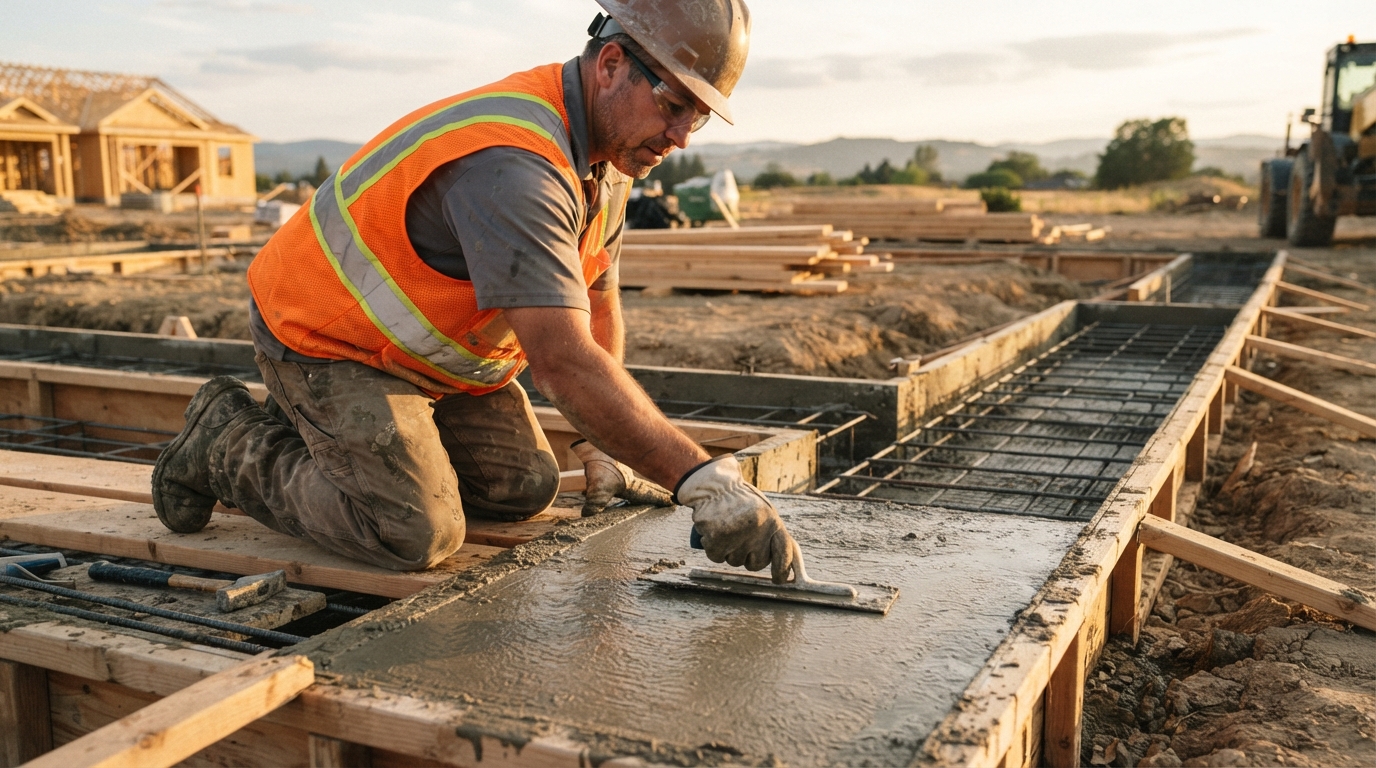
• A durable concrete foundation depends on proper soil evaluation, correct curing time, and reinforcement suited to local ground conditions.
• Expansive clay soil common around Amarillo, TX requires extra attention to drainage and footing depth during construction.
• Working with an experienced contractor familiar with regional soil behavior reduces long-term cracking and settlement risk.
A strong concrete foundation starts with accurate soil assessment, proper footing depth, and consistent curing, since these three factors determine whether a structure resists cracking and settlement over time. Builders who skip soil testing or rush the curing process often see problems within a few years, especially in regions with reactive clay soils.
Learn More about Simon & Son’Z Concrete Construction, a contractor working in Amarillo, TX, and nearby communities on residential and commercial concrete projects. Property owners planning new construction can review Concrete Foundation Construction Amarillo, TX details and service history before scheduling an evaluation. Understanding how local ground conditions affect a slab or footing is a useful first step before any pour begins.
Why Soil Conditions Drive Foundation Design
Foundation performance depends heavily on what lies beneath the slab, not just the concrete mix itself. Most Amarillo homes are built on expansive clay soil, and the Amarillo area is particularly known for highly expansive clay soil. This matters because when clay soil becomes wet, it expands, and when it dries out, it shrinks, placing constant stress on a foundation.
That cyclical movement is why foundation design in the Texas Panhandle differs from areas with stable, well-draining soil. Expansive clays can dramatically increase in volume when they absorb moisture, and lab studies show they can swell up to 15 times their dry volume. Builders who account for this behavior during initial construction typically avoid costlier corrective work later.
Property owners can review soil composition for a specific site through the USDA NRCS Web Soil Survey, a federal tool used to assess shrink-swell potential before construction begins. Checking this data ahead of a pour helps determine whether additional footing depth, reinforcement, or drainage measures are warranted.
Core Steps in Concrete Foundation Construction
A properly built foundation generally follows a sequence that accounts for both structural load and soil behavior:
• Site evaluation and grading – establishing proper slope away from the structure to manage surface water.
• Excavation to adequate depth – placing footings below the active soil zone where moisture swings are most severe.
• Reinforcement placement – positioning rebar or wire mesh to resist tension cracking as the slab cures.
• Concrete pour and finishing – placing the mix in controlled lifts and finishing the surface for durability.
• Curing period – allowing the slab to gain strength over several weeks before full loading.
Skipping or rushing any of these steps increases the likelihood of early cracking, particularly in soil conditions already prone to movement.
Foundation Type Comparison for Regional Soil
|
Foundation Type |
Typical Use |
Soil Suitability |
|
Slab-on-grade |
Residential homes, garages |
Requires stable or treated subgrade |
|
Pier and beam |
Homes on reactive clay |
Better tolerance for soil movement |
|
Foundations for metal buildings |
Commercial and agricultural structures |
Needs reinforced footings for load distribution |
|
Reinforced slab with deepened footings |
New residential construction |
Common approach for expansive clay areas |
Choosing the right type depends on the structure’s load, local soil report, and drainage conditions on the specific lot.
Drainage and Maintenance Considerations
Drainage plays a direct role in how long a foundation performs well after construction. Proper drainage plays a key role in managing soil movement, and maintaining consistent moisture around the foundation helps reduce extreme soil movement and lowers the risk of long-term damage. Gutters, downspout extensions, and graded landscaping that directs water away from the slab are practical, low-cost ways to limit moisture swings near the footing.
Property owners should also monitor for early warning signs rather than waiting for visible structural damage. Foundation movement caused by soil conditions can show up in several ways, including exterior cracks and uneven floors due to foundation issues. Catching these signs early often limits repair scope and cost.
Frequently Asked Questions
How deep should footings be in expansive clay soil? Footing depth depends on local soil test results, but foundations in reactive clay areas typically require deeper placement below the active zone where moisture fluctuation is greatest.
Can a new foundation be designed to resist clay soil movement? Yes. Reinforcement, proper footing depth, and attention to drainage during construction reduce the risk of movement-related cracking compared to foundations built without these considerations.
Is soil testing necessary before pouring a new foundation? Soil testing identifies clay content and expansion potential, which directly informs footing depth and reinforcement decisions before construction begins.
Does climate affect foundation construction timing? Seasonal moisture swings affect curing conditions and soil behavior, so scheduling a pour during stable weather can support more consistent results.
Final Considerations
Based in USA, Learn More about Simon & Son’Z Concrete Construction’s work spans communities across Amarillo, TX, where expansive clay soil remains a persistent factor in foundation planning. Reviewing soil data, selecting an appropriate foundation type, and maintaining consistent drainage are practical steps that apply to most new construction projects in this region, regardless of which contractor performs the work.
Service availability details for Learn More about Simon & Son’Z Concrete Construction are published for the Amarillo, TX service area.